

Cisco CCNA
- Exam: 200-301 (Cisco Certified Network Associate (CCNA))
- Certification: CCNA (Cisco Certified Network Associate)
- Certification Provider: Cisco
100% Updated Cisco CCNA Certification 200-301 Exam Dumps
Cisco CCNA 200-301 Practice Test Questions, CCNA Exam Dumps, Verified Answers
-
-

200-301 Questions & Answers
747 Questions & Answers
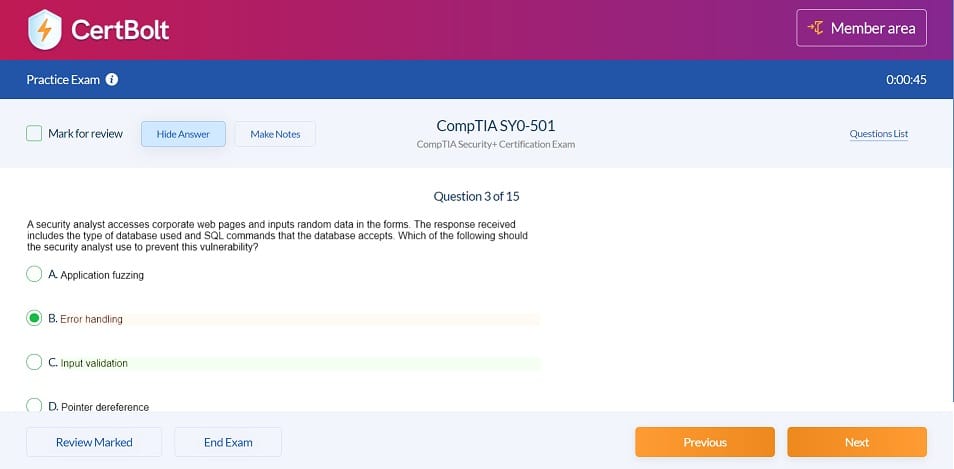
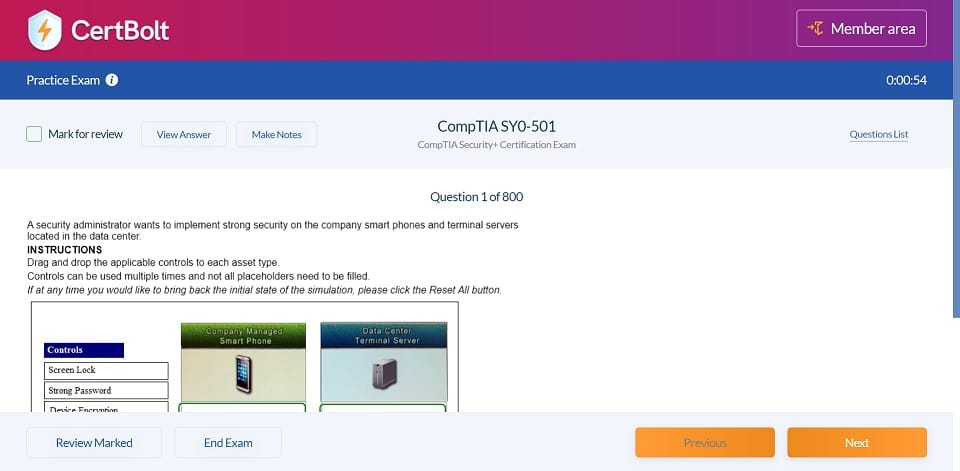
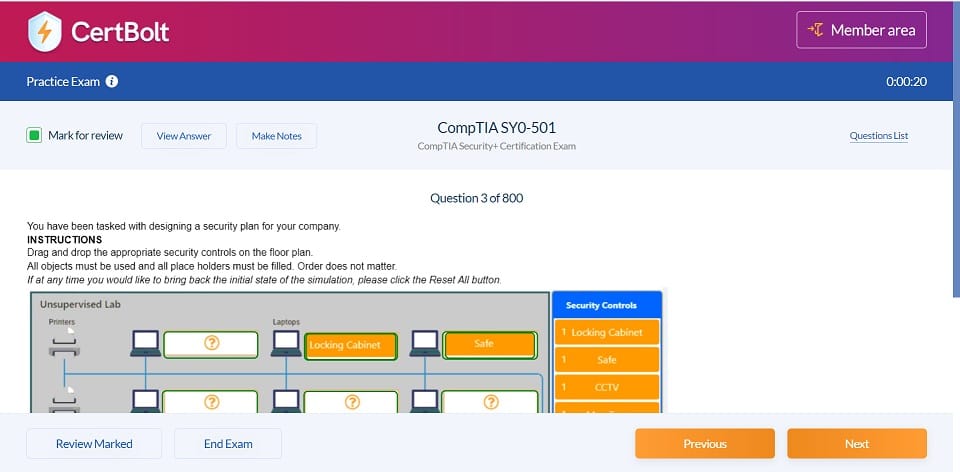
Includes 100% Updated 200-301 exam questions types found on exam such as drag and drop, simulation, type in, and fill in the blank. Fast updates, accurate answers for Cisco CCNA 200-301 exam. Exam Simulator Included!
-

200-301 Study Guide
1969 PDF Pages
Study Guide developed by industry experts who have written exams in the past. Covers in-depth knowledge which includes Entire Exam Blueprint.
-
-
Cisco CCNA Certification Practice Test Questions, Cisco CCNA Certification Exam Dumps
Latest Cisco CCNA Certification Practice Test Questions & Exam Dumps for Studying. Cram Your Way to Pass with 100% Accurate Cisco CCNA Certification Exam Dumps Questions & Answers. Verified By IT Experts for Providing the 100% Accurate Cisco CCNA Exam Dumps & Cisco CCNA Certification Practice Test Questions.
Mastering CCNA Network Fundamentals
Networking is the invisible infrastructure that makes the modern digital world function. Every email sent, every video streamed, every financial transaction processed, and every cloud application accessed depends on a complex web of interconnected devices, protocols, and standards working in precise coordination. The professionals who design, configure, maintain, and troubleshoot this infrastructure carry responsibility for systems that billions of people depend on daily without ever thinking about them. The Cisco Certified Network Associate certification, universally known as CCNA, is the industry's most recognized credential for professionals who want to demonstrate that they have the foundational knowledge and practical skills to work competently with this critical infrastructure.
The CCNA has been a benchmark in the networking industry for more than two decades, and its longevity reflects the genuine rigor and relevance of what it tests. Unlike certifications that have faded as technology evolved around them, the CCNA has been periodically restructured to remain current with how networks are actually built and operated. The most recent version, introduced in 2020, consolidated what had previously been multiple track-specific certifications into a single comprehensive exam that covers networking fundamentals, IP connectivity, IP services, security fundamentals, automation, and programmability. This breadth makes it both demanding and genuinely valuable as a preparation for real-world network engineering work.
The Architecture of the CCNA Certification Exam
The current CCNA certification requires passing a single exam designated 200-301, which represents a significant restructuring from earlier iterations of the certification that involved multiple exams across different tracks. This consolidated format means that a single focused preparation effort leads to a single credential rather than requiring candidates to sequence through multiple exams before earning the certification. The exam consists of approximately one hundred questions presented in a variety of formats including multiple choice, drag and drop, fill in the blank, and simulation questions that require candidates to configure actual network devices within a virtual environment.
The exam is administered through Pearson VUE at physical testing centers and through an online proctored format for candidates who prefer to test from their own location. The allotted time is one hundred and twenty minutes, which candidates consistently describe as sufficient for the non-simulation questions but tight when simulation questions require significant configuration work in the virtual device interface. The passing score is eight hundred and twenty on a scale of three hundred to one thousand, and Cisco uses adaptive scoring that weights questions differently based on difficulty. The exam fee is currently three hundred and thirty dollars in the United States, positioning it as a meaningful financial investment that provides additional motivation to prepare thoroughly before sitting for the assessment.
Network Fundamentals as the Foundation of All Subsequent Learning
Every topic in the CCNA curriculum ultimately rests on a solid grasp of network fundamentals, and candidates who invest in truly understanding this foundational layer rather than memorizing surface-level facts consistently outperform those who treat it as background noise on their way to more advanced content. Network fundamentals covers the OSI model and TCP/IP model, the role of each layer, how data is encapsulated and de-encapsulated as it moves through those layers, the characteristics that distinguish different types of network topologies, and the fundamental differences between switches, routers, hubs, and other network devices.
The OSI model deserves particular attention because it serves as the conceptual framework through which every other networking concept is understood and discussed. Knowing that a switch operates at Layer 2 using MAC addresses, that a router operates at Layer 3 using IP addresses, and that a firewall can operate at multiple layers tells you something meaningful about how each device behaves and what problems it can and cannot solve. The TCP/IP model provides a more practical framework that maps more directly to how modern networks actually function, and understanding the relationship between the two models clarifies discussions that use them interchangeably in ways that would otherwise create confusion.
IP Addressing and Subnetting in Thorough Detail
IP addressing and subnetting is the topic that most consistently separates candidates who pass the CCNA from those who do not, and it deserves more preparation time than almost any other area in the curriculum. An IP address in version four format consists of thirty-two bits organized into four octets, each represented as a decimal number between zero and two hundred and fifty-five. The address is divided into a network portion and a host portion, with the subnet mask determining exactly where that boundary falls. Understanding this division is the basis for everything else in subnetting.
Classless Inter-Domain Routing notation expresses the subnet mask as a slash followed by the number of network bits, which is the format most commonly encountered in modern networking documentation and exam questions. A slash twenty-four notation means the first twenty-four bits identify the network, leaving eight bits for host addresses within that network. The ability to calculate the network address, broadcast address, first usable host address, last usable host address, and total number of usable hosts for any given CIDR block is a skill the CCNA tests extensively and that real network engineers use constantly in their daily work. Developing this calculation ability to the point where it is fast and reliable requires dedicated practice with subnetting exercises until the patterns become intuitive rather than requiring careful step-by-step working each time.
Switching Concepts and VLAN Architecture
Ethernet switching is the technology that connects devices within a local area network, and the CCNA covers switching in enough depth that candidates who work through it develop a genuine understanding of how modern switched networks function rather than a superficial familiarity. A switch builds and maintains a MAC address table that maps device MAC addresses to the physical ports on which those devices are reachable. When a frame arrives, the switch consults this table to determine whether it knows the destination and, if so, forwards the frame only to the specific port where the destination device resides rather than flooding it to all ports as a hub would.
Virtual Local Area Networks allow a single physical switch to carry traffic for multiple logically separate networks, which is essential for modern network design. A VLAN separates broadcast domains within the switch, meaning that traffic sent to the broadcast address of one VLAN does not reach devices in other VLANs. Trunk ports carry traffic for multiple VLANs between switches and between switches and routers using encapsulation standards such as 802.1Q, which adds a tag to each frame identifying the VLAN it belongs to. The router on a stick configuration uses a single physical link divided into subinterfaces to route traffic between VLANs, while Layer 3 switches can perform inter-VLAN routing directly without requiring a separate router.
Routing Protocols and How Routers Learn About Networks
Routing is the process of selecting paths through a network to forward packets from their source to their destination, and the CCNA covers routing concepts with a depth that requires candidates to think carefully about how routers make forwarding decisions. A router consults its routing table when a packet arrives, comparing the destination IP address against known network prefixes and selecting the most specific match to determine where to forward the packet. Routes in the routing table come from three sources: directly connected networks, statically configured routes, and dynamically learned routes from routing protocols.
Static routes are manually configured entries that tell a router explicitly how to reach a specific network through a specific next-hop address or exit interface. They are simple and predictable but require manual updates when the network topology changes, making them impractical for large networks where changes occur frequently. Dynamic routing protocols automate the exchange of routing information between routers, allowing the routing table to update automatically when links fail or new networks are added. The CCNA covers OSPF, the Open Shortest Path First protocol, as the primary dynamic routing protocol, requiring candidates to understand how OSPF discovers neighbors, exchanges link-state information, calculates the shortest path using Dijkstra's algorithm, and organizes networks into areas for scalability.
Wireless Networking Concepts and Infrastructure
Wireless networking has become a central component of virtually every modern network environment, and the CCNA addresses it with enough depth that candidates develop a solid understanding of how wireless infrastructure is architected and managed. The 802.11 standards define the specifications for wireless LAN technology, with different amendments specifying different frequency bands, maximum data rates, and channel configurations. The current primary standards in enterprise deployments include 802.11ac operating in the five gigahertz band and 802.11ax, also known as Wi-Fi 6, which operates in both the two-point-four and five gigahertz bands with significant improvements in efficiency and capacity.
Wireless networks in enterprise environments are typically managed through a wireless LAN controller architecture rather than using autonomous access points that each operate independently. In a controller-based deployment, lightweight access points handle the radio frequency transmission and reception while a centralized controller manages configuration, roaming, radio frequency optimization, and security policy enforcement. Cisco's DNA Center platform extends this centralized management model with software-defined networking capabilities that allow wireless and wired infrastructure to be managed through a unified policy-based interface. The CCNA covers the conceptual framework for these architectures without requiring deep configuration expertise, providing the foundation for more advanced wireless specialization in subsequent certifications.
Network Security Fundamentals and Access Control
Security has become inseparable from network design, and the CCNA reflects this reality by including a security fundamentals domain that covers the threats networks face and the controls available to defend against them. The exam covers the concepts of confidentiality, integrity, and availability as the three foundational security objectives, and addresses how various attack types including denial of service attacks, man-in-the-middle attacks, phishing, and malware threaten these objectives. Understanding the threat landscape conceptually is the prerequisite for understanding why specific security controls exist and how they address particular vulnerabilities.
Access control lists are one of the most important practical security tools covered in the CCNA, and the exam tests both conceptual understanding and configuration syntax. Standard ACLs filter traffic based only on source IP address and are best placed as close to the destination as possible. Extended ACLs filter based on source and destination IP addresses, protocol, and port numbers, providing much more granular control and typically placed as close to the source of unwanted traffic as possible. Port security on switches allows administrators to restrict which MAC addresses can communicate through a specific port, preventing unauthorized devices from connecting to the network. The exam also covers the concept of AAA, which stands for authentication, authorization, and accounting, as the framework for controlling who can access network devices and what they are permitted to do once authenticated.
WAN Technologies and Connectivity Options
Wide area network technologies connect geographically separated locations, and the CCNA provides an overview of the options organizations use to establish these connections. Traditional WAN connectivity options including leased lines, Frame Relay, and ISDN have largely given way to more modern alternatives, and the CCNA curriculum reflects current practice by emphasizing the WAN technologies that dominate contemporary enterprise deployments. Multiprotocol Label Switching, commonly known as MPLS, provides a high-performance and reliable connectivity option that many enterprises use to connect branch offices to headquarters and data centers.
Virtual private network technology allows organizations to establish secure encrypted tunnels across public internet infrastructure, which has become increasingly central to enterprise WAN strategy particularly as remote work has expanded the need for secure remote access. The CCNA covers both site-to-site VPNs that connect fixed locations and remote access VPNs that allow individual users to securely connect to the corporate network from any location with internet access. Software-defined WAN technology represents a newer approach that uses software-defined networking principles to simplify WAN management, optimize traffic routing across multiple connection types, and apply consistent policy across distributed environments. The CCNA introduces SD-WAN concepts at a level that prepares candidates for more advanced study without requiring deep implementation expertise.
IP Services That Support Network Operations
Beyond the core protocols that move data through a network, a range of supporting services make modern networks practical and manageable, and the CCNA covers the most important of these in enough depth to prepare candidates for real operational work. Dynamic Host Configuration Protocol automates the assignment of IP addresses, subnet masks, default gateways, and DNS server addresses to devices joining the network, eliminating the manual configuration that would otherwise be required for every device. Understanding how DHCP operates, including the four-step discover, offer, request, acknowledge process, how DHCP relay agents allow a single server to serve multiple subnets, and how to configure a Cisco router as both a DHCP server and a relay agent, is practical knowledge that appears in both exam questions and daily network administration work.
Network Address Translation allows organizations to use private IP address ranges within their internal networks while presenting one or more public IP addresses to the external internet, which conserves the limited supply of public IPv4 addresses and provides a degree of internal address obscurity. The CCNA distinguishes between static NAT that maps a single private address to a fixed public address, dynamic NAT that maps private addresses to a pool of public addresses, and Port Address Translation, sometimes called NAT overload, which maps many private addresses to a single public address by tracking connection state using port numbers. Domain Name System translates human-readable hostnames into IP addresses, and understanding how DNS resolution works, including recursive and iterative queries, the role of authoritative and recursive resolvers, and the hierarchical structure of the DNS namespace, is foundational knowledge for anyone working with modern networks.
Network Automation and Programmability Concepts
The inclusion of automation and programmability content in the CCNA represents one of the most significant shifts in the certification's recent evolution and reflects the genuine transformation happening in how networks are configured and managed at scale. Traditional network management involves logging into individual devices through a command-line interface and entering configuration commands manually, a process that is time-consuming, error-prone, and difficult to scale across large environments. Software-defined networking and network automation address these limitations by introducing programmatic ways of configuring and managing network infrastructure.
The CCNA covers the conceptual foundations of software-defined networking, including the separation of the control plane from the data plane and how a centralized controller can manage forwarding decisions across many network devices simultaneously. The exam addresses application programming interfaces as the mechanism through which automation tools communicate with network devices and management platforms, distinguishing between northbound APIs that connect the controller to management applications and southbound APIs that connect the controller to network devices. REST APIs, which use HTTP methods and JSON or XML data formats to exchange information, are the most commonly used API style in modern network management platforms and the format the CCNA introduces candidates to. Configuration management tools including Ansible, Puppet, and Chef are introduced conceptually, with the exam expecting candidates to understand what these tools do and why they are used rather than requiring the ability to write automation scripts in any specific language.
IPv6 and the Transition Away From IPv4
The exhaustion of the IPv4 address space has made IPv6 adoption an increasingly urgent reality for network engineers, and the CCNA includes IPv6 coverage that prepares candidates for the transition already underway in many networks. IPv6 uses one hundred and twenty-eight bit addresses represented in hexadecimal notation and separated by colons, providing an address space so large that it is effectively inexhaustible for any practical purpose. The different address types in IPv6, including global unicast addresses that are routable on the public internet, link-local addresses that are automatically configured on every IPv6-enabled interface and used for communication within a single network segment, and multicast addresses that replace the broadcast functionality of IPv4, each serve specific purposes that candidates need to understand clearly.
IPv6 eliminates the need for Network Address Translation because the vast address space allows every device to have a globally unique public address, which simplifies end-to-end connectivity and removes the complications that NAT introduces for certain applications and protocols. The exam covers both stateless address autoconfiguration, where devices generate their own IPv6 addresses based on the network prefix advertised by the router and the device's own MAC address, and DHCPv6, which provides a more controlled address assignment process similar to DHCP in IPv4 networks. Dual-stack operation, where network devices are configured with both IPv4 and IPv6 addresses simultaneously, is the most common transition approach and allows networks to support both protocols during the extended period when complete migration to IPv6 remains in progress across the global internet infrastructure.
Effective Preparation Strategies for Exam Success
Preparing for the CCNA requires a structured approach that combines conceptual study with extensive hands-on practice, and candidates who invest in both consistently achieve better outcomes than those who focus on one at the expense of the other. Video courses from established instructors including Jeremy's IT Lab, which is freely available on YouTube and covers every exam objective in depth, and paid courses from providers like CBT Nuggets, Udemy, and LinkedIn Learning provide structured curriculum that builds knowledge progressively. Official Cisco Press study guides written specifically for the 200-301 exam offer comprehensive coverage in a format that many candidates find valuable for reference and review alongside video-based learning.
Packet Tracer, Cisco's free network simulation software, provides a hands-on environment where candidates can build network topologies, configure devices using the Cisco IOS command-line interface, and observe how their configurations affect network behavior. Building the topologies described in study materials and replicating the configuration examples from study guides develops the command-line familiarity and configuration intuition that simulation questions on the actual exam require. Practice exams from reputable providers including Boson, which is widely regarded as the closest commercially available approximation of actual Cisco exam question style, help candidates identify knowledge gaps, build exam-condition endurance, and develop the ability to parse complex scenario-based questions accurately under time pressure. The combination of structured learning, hands-on lab practice, and rigorous practice exam work, sustained consistently over three to six months of dedicated preparation, represents the approach that produces the highest success rates for candidates pursuing this demanding and genuinely rewarding certification.
Conclusion
Earning the CCNA certification opens a meaningful range of professional opportunities for network engineers at the beginning of their careers and provides significant career advancement leverage for those already working in IT support or adjacent roles. Network administrator positions, which involve the day-to-day configuration, monitoring, and maintenance of an organization's network infrastructure, are the most direct entry point for CCNA holders. Network engineer roles, which carry broader design and implementation responsibility alongside operational duties, become accessible with the combination of the CCNA credential and accumulated practical experience. Systems administrator positions in organizations where network management is part of a broader infrastructure role frequently list the CCNA as a preferred or required qualification.
The salary premium associated with the CCNA is well documented across compensation surveys and job market data, with certified professionals consistently commanding higher compensation than their non-certified peers in equivalent roles. Beyond the direct financial return, the CCNA serves as the foundation for the entire Cisco certification hierarchy, positioning holders for progression to the CCNP level, which covers advanced enterprise networking, security, data center, wireless, and service provider specializations. The discipline, technical depth, and structured thinking that the CCNA preparation process develops are qualities that compound in value throughout a networking career, making the investment in thorough preparation one of the highest-return decisions an aspiring network professional can make at the very beginning of a career that rewards expertise, continuous learning, and the kind of deep technical engagement that the CCNA certification is specifically designed to both develop and recognize.
Pass your next exam with Cisco CCNA certification exam dumps, practice test questions and answers, study guide, video training course. Pass hassle free and prepare with Certbolt which provide the students with shortcut to pass by using Cisco CCNA certification exam dumps, practice test questions and answers, video training course & study guide.
-
Cisco CCNA Certification Exam Dumps, Cisco CCNA Practice Test Questions And Answers
Got questions about Cisco CCNA exam dumps, Cisco CCNA practice test questions?
Click Here to Read FAQ -
-
Top Cisco Exams
- 200-301 - Cisco Certified Network Associate (CCNA)
- 350-401 - Implementing Cisco Enterprise Network Core Technologies (ENCOR)
- 300-410 - Implementing Cisco Enterprise Advanced Routing and Services (ENARSI)
- 350-701 - Implementing and Operating Cisco Security Core Technologies
- 350-601 - Implementing and Operating Cisco Data Center Core Technologies (DCCOR)
- 810-110 - Cisco AI Technical Practitioner (AITECH)
- 300-715 - Implementing and Configuring Cisco Identity Services Engine (300-715 SISE)
- 300-420 - Designing Cisco Enterprise Networks (ENSLD)
- 300-415 - Implementing Cisco SD-WAN Solutions (ENSDWI)
- 350-101 - Implementing and Operating Cisco Wireless Core Technologies (WLCOR)
- 350-801 - Implementing Cisco Collaboration Core Technologies (CLCOR)
- 200-901 - DevNet Associate (DEVASC)
- 400-007 - Cisco Certified Design Expert
- 350-501 - Implementing and Operating Cisco Service Provider Network Core Technologies (SPCOR)
- 350-201 - Performing Cybersecurity Using Cisco Security Technologies (CBRCOR)
- 300-620 - Implementing Cisco Application Centric Infrastructure (DCACI)
- 300-710 - Securing Networks with Cisco Firewalls
- 500-220 - Cisco Meraki Solutions Specialist
- 100-150 - Cisco Certified Support Technician (CCST) Networking
- 200-201 - Understanding Cisco Cybersecurity Operations Fundamentals (CBROPS)
- 350-901 - Designing, Deploying, and Managing Network Automation Systems
- 820-605 - Cisco Customer Success Manager (CSM)
- 300-110 - Designing Cisco Wireless Networks (WLSD)
- 800-150 - Supporting Cisco Devices for Field Technicians
- 300-640 - Implementing Cisco Data Center AI Infrastructure (DCAI)
- 300-745 - Designing Cisco Security Infrastructure
- 100-160 - Cisco Certified Support Technician (CCST) Cybersecurity
- 300-440 - Designing and Implementing Cloud Connectivity (ENCC)
- 300-815 - Implementing Cisco Advanced Call Control and Mobility Services (CLASSM)
- 700-805 - Cisco Renewals Manager (CRM)
- 500-442 - Administering Cisco Contact Center Enterprise
- 300-435 - Automating Cisco Enterprise Solutions (ENAUTO)
- 300-510 - Implementing Cisco Service Provider Advanced Routing Solutions (SPRI)
- 300-610 - Designing Cisco Data Center Infrastructure for Traditional and AI Workloads
- 300-730 - Implementing Secure Solutions with Virtual Private Networks (SVPN 300-730)
- 100-140 - Cisco Certified Support Technician (CCST) IT Support
- 300-720 - Securing Email with Cisco Email Security Appliance (300-720 SESA)
- 300-515 - Implementing Cisco Service Provider VPN Services (SPVI)
- 300-425 - Designing Cisco Enterprise Wireless Networks (300-425 ENWLSD)
- 300-215 - Conducting Forensic Analysis and Incident Response Using Cisco CyberOps Technologies (CBRFIR)
- 300-220 - Conducting Threat Hunting and Defending using Cisco Technologies for Cybersecurity
- 500-560 - Cisco Networking: On-Premise and Cloud Solutions (OCSE)
- 700-750 - Cisco Small and Medium Business Engineer
- 700-246 - Cisco Environmental Sustainability Practice-Building - Stage 2 (CESPB)
- 700-242 - Cisco Environmental Sustainability Fundamentals - Stage 1 (CESF)
- 500-470 - Cisco Enterprise Networks SDA, SDWAN and ISE Exam for System Engineers (ENSDENG)
- 500-443 - Advanced Administration and Reporting of Contact Center Enterprise
- 300-430 - Implementing Cisco Enterprise Wireless Networks (300-430 ENWLSI)
- 300-830 - Implementing Cisco Collaboration Cloud Customer Experience (CLCCE)
- 300-820 - Implementing Cisco Collaboration Cloud and Edge Solutions
- 300-725 - Securing the Web with Cisco Web Security Appliance (300-725 SWSA)
- 300-615 - Troubleshooting Cisco Data Center Infrastructure (DCIT)
- 300-445 - Designing and Implementing Enterprise Network Assurance
- 010-151 - Supporting Cisco Data Center System Devices (DCTECH)
-
Purchase Cisco 200-301 Exam Training Products Individually
Last Week Results!
Get Questions & Answers PDF Version
With the PDF Version of the exam questions, you can study at any time and place, which are convenient to you. This means that you can work with the CCNA Questions & Answers PDF Version on your PC or use it on your portable device while on the way to your work or home. The PDF exam file also offers you the possibility to print it and use this printed version if you prefer it over the digital one.
Since the file is in the .pdf format, you can open it with a wide range of programs and applications, including Google Docs, OpenOffice, and Adobe Acrobat Reader DC. It is a convenient and easy-to-use option that will help you master new knowledge and skills with relevant materials.
* PDF Version is an add-on to your purchase of CCNA Questions & Answers and can't be purchased separately.
Only Registered Members can Download Exam Demo Questions & Answers
Please fill out your email address below in order to download exam demo Questions & Answers.
Registration is Free and Easy, You Simply need to provide a valid email address.
- Trusted by hundreds of IT Certification Candidates Every Month
- 1200+ Exams Available
- Instant download After Registration