

Databricks Databricks Certified Data Engineer Associate
- Exam: Certified Data Engineer Associate
- Certification: Databricks Certified Data Engineer Associate
- Certification Provider: Databricks
100% Updated Databricks Databricks Certified Data Engineer Associate Certification Certified Data Engineer Associate Exam Dumps
Databricks Databricks Certified Data Engineer Associate Certified Data Engineer Associate Practice Test Questions, Databricks Certified Data Engineer Associate Exam Dumps, Verified Answers
-
-

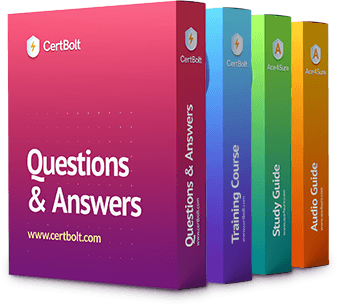
Certified Data Engineer Associate Questions & Answers
280 Questions & Answers
Includes 100% Updated Certified Data Engineer Associate exam questions types found on exam such as drag and drop, simulation, type in, and fill in the blank. Fast updates, accurate answers for Databricks Databricks Certified Data Engineer Associate Certified Data Engineer Associate exam. Exam Simulator Included!
-
Certified Data Engineer Associate Online Training Course
38 Video Lectures
Learn from Top Industry Professionals who provide detailed video lectures based on 100% Latest Scenarios which you will encounter in exam.
-

Certified Data Engineer Associate Study Guide
432 PDF Pages
Study Guide developed by industry experts who have written exams in the past. Covers in-depth knowledge which includes Entire Exam Blueprint.
-
-
Databricks Databricks Certified Data Engineer Associate Certification Practice Test Questions, Databricks Databricks Certified Data Engineer Associate Certification Exam Dumps
Latest Databricks Databricks Certified Data Engineer Associate Certification Practice Test Questions & Exam Dumps for Studying. Cram Your Way to Pass with 100% Accurate Databricks Databricks Certified Data Engineer Associate Certification Exam Dumps Questions & Answers. Verified By IT Experts for Providing the 100% Accurate Databricks Databricks Certified Data Engineer Associate Exam Dumps & Databricks Databricks Certified Data Engineer Associate Certification Practice Test Questions.
Databricks Certified Data Engineer Associate Certification Exam Dumps
The Databricks Certified Data Engineer Associate exam is a foundational credential designed to validate your ability to work with the Databricks Lakehouse Platform in a data engineering capacity. The exam covers core concepts including Delta Lake, Apache Spark, data ingestion pipelines, workflow orchestration, and the fundamental principles of building reliable data pipelines at scale. Rather than testing abstract theoretical knowledge, the exam is structured around practical scenarios that reflect the kind of work data engineers perform when building and maintaining data systems on the Databricks platform.
Candidates are expected to demonstrate familiarity with the Databricks environment itself, including how to use notebooks, clusters, jobs, and the Unity Catalog for data governance. The exam also covers transformation patterns, incremental data processing using Auto Loader and Delta Live Tables, and the principles of data quality enforcement within pipelines. Because Databricks sits at the intersection of data engineering, analytics engineering, and machine learning infrastructure, the exam touches on a broad range of topics while maintaining a clear focus on the data engineering workflow from raw data ingestion through to serving clean, reliable data to downstream consumers.
Who Should Consider Taking This Certification
The Databricks Data Engineer Associate certification is primarily aimed at data engineers, analytics engineers, and data platform engineers who use or plan to use Databricks as their primary data processing environment. If you spend your working hours building ETL pipelines, managing data lakes, transforming raw data into analytics-ready datasets, or maintaining data infrastructure on cloud platforms, this exam is well aligned with your daily responsibilities. It formalizes the knowledge that practitioners accumulate through hands-on platform work and gives that knowledge a recognized credential that travels with you across employers and projects.
Early-career data professionals who are transitioning into data engineering from adjacent roles like data analysis, software development, or database administration will also find this certification valuable. The associate-level positioning means the exam does not assume years of deep Databricks experience, but it does expect a working familiarity with the platform and with core data engineering concepts. Professionals who have completed Databricks training courses, worked through the official learning paths, or spent several months using the platform in a professional or project-based context are well positioned to pursue the exam with a reasonable expectation of success on the first attempt.
Core Topics Covered Across the Exam Domains
The exam is organized around several key domains that together represent the full scope of data engineering work on the Databricks platform. The Lakehouse Platform domain covers the architecture of the Databricks Lakehouse, the role of Delta Lake as the storage layer, and how the platform differs from traditional data warehouses and data lakes. Understanding why the Lakehouse approach was developed and what problems it solves gives you the conceptual foundation for everything else the exam tests. This domain also includes knowledge of how Databricks integrates with cloud storage services on AWS, Azure, and Google Cloud.
The data processing domain covers Apache Spark fundamentals as they apply within the Databricks environment, including how to read and write data in various formats, how to apply transformations, and how to optimize query performance. Delta Live Tables, Databricks' declarative pipeline framework, receives substantial coverage as a modern approach to building reliable, testable data pipelines. The exam also addresses incremental processing patterns, data quality expectations, and how to structure pipelines that handle late-arriving data and schema evolution gracefully. Workflow orchestration, job scheduling, and multi-task pipeline dependencies round out the operational side of what the exam covers.
How Difficult the Exam Is for Working Professionals
The associate-level designation is accurate in describing the difficulty of this exam relative to more advanced Databricks credentials. Candidates with genuine hands-on experience using Databricks in a professional setting generally find the exam challenging but achievable with focused preparation. The scenario-based question format means that you cannot rely on surface-level familiarity with terminology alone. You need to be able to read a described data engineering situation and identify the most appropriate tool, approach, or configuration within the Databricks ecosystem to address it effectively.
Where candidates most commonly encounter difficulty is in the Delta Live Tables and Unity Catalog sections, particularly if their day-to-day work has not exposed them to these features in depth. Delta Live Tables represents a relatively modern addition to the Databricks platform, and professionals who learned data engineering on the platform before DLT was widely adopted may find that they need to invest extra study time in this area. Similarly, Unity Catalog concepts around data governance, lineage, and access control can feel abstract without hands-on experience. Allocating additional preparation time to these specific areas tends to produce meaningful improvement in overall readiness.
Setting Up Your Study Plan Before the Exam Date
A well-structured study plan is one of the most important factors in first-attempt success on the Databricks Data Engineer Associate exam. Beginning with a thorough review of the official exam guide, which lists every topic area and subtopic covered on the exam, gives you a clear inventory of what needs to be learned and what can be reviewed more briefly based on existing knowledge. Mapping your current knowledge against that inventory honestly, without overestimating your familiarity with any given topic, helps you allocate your preparation time where it will have the greatest impact on your final score.
Most candidates with moderate Databricks experience find that six to eight weeks of consistent preparation is sufficient for a confident first attempt. Those with less hands-on experience should plan for ten to twelve weeks, with a significant portion of that time devoted to practical work in an actual Databricks environment rather than passive reading. Setting milestone checkpoints throughout your study period, such as completing a practice exam at the halfway point and again in the final week, gives you data-driven feedback on your progress and allows you to adjust your focus based on which domains still need work rather than guessing at your readiness.
Official Learning Resources Worth Your Time
Databricks provides an official learning path specifically designed to prepare candidates for the Data Engineer Associate exam, and working through it systematically is one of the most efficient ways to cover the required material. The Databricks Academy offers self-paced courses covering the Lakehouse platform, Delta Lake, Spark fundamentals, Delta Live Tables, and workflow orchestration that map directly to the exam domains. These courses combine video instruction with hands-on lab exercises in actual Databricks environments, giving you both the conceptual framework and the practical exposure needed to answer scenario-based questions with confidence.
Beyond the official Databricks Academy content, the Databricks documentation is an authoritative and detailed resource that goes deeper on specific features and behaviors than any course can cover comprehensively. Reading the documentation sections on Delta Lake, Auto Loader, Delta Live Tables, and Unity Catalog gives you the precise technical understanding that distinguishes candidates who simply recognize correct answers from those who genuinely understand why an answer is correct. Community resources including the Databricks community forum, relevant content on platforms like Medium and Substack from practicing data engineers, and study groups on LinkedIn or Discord supplement the official materials with real-world perspective and recent exam experiences.
Building Hands-On Experience on the Platform
No amount of reading or video watching substitutes for time spent actually working in a Databricks environment when preparing for this exam. Databricks offers a community edition that provides free access to a limited but functional Databricks workspace, which is sufficient for practicing the core skills tested on the exam. Building simple data pipelines, experimenting with Delta Lake operations like time travel and schema enforcement, setting up Auto Loader ingestion from cloud storage, and creating Delta Live Tables pipelines in the community edition gives you hands-on familiarity that directly translates to exam performance.
Candidates who have access to a Databricks workspace through their employer should take advantage of that access to work on self-directed projects that cover the exam topics. Building a small end-to-end pipeline that ingests raw data, applies transformations using Delta Live Tables, enforces data quality expectations, and delivers clean data to a final table in the Unity Catalog touches nearly every major domain covered on the exam. The process of building that pipeline, encountering errors, troubleshooting them, and iterating toward a working solution provides the kind of deep experiential learning that makes scenario-based exam questions feel familiar rather than abstract.
Practice Exams and How to Use Them Effectively
Practice exams are an essential component of effective preparation for the Databricks Data Engineer Associate exam, but their value depends heavily on how you use them. Taking a practice exam and simply checking whether you passed or failed misses most of the value these resources provide. The more productive approach is to review every question you answered incorrectly, understand why your chosen answer was wrong and why the correct answer is right, and then go back to the relevant documentation or course material to reinforce your understanding of that specific concept before moving on.
Databricks offers official practice exams through its academy platform, and several third-party providers offer additional practice question sets through platforms like Udemy and Whizlabs. Using multiple practice exam sources exposes you to a wider variety of question phrasings and scenario types, which reduces the risk of being surprised by an unfamiliar question format on the actual exam. Aim to achieve consistently high scores on practice exams before scheduling your actual exam date, and treat any domain where your practice scores are significantly lower than others as a signal to return to that material for additional study before testing your readiness again.
Understanding Delta Lake as a Core Exam Focus
Delta Lake is arguably the most important single topic on the Databricks Data Engineer Associate exam, and investing substantial study time in understanding it deeply pays dividends across multiple exam domains. Delta Lake is the open-source storage layer that provides ACID transactions, scalable metadata handling, and data versioning capabilities to data lakes, and it is the foundation upon which the Databricks Lakehouse Platform is built. Understanding how Delta Lake achieves ACID compliance, how the transaction log works, and how features like time travel and schema enforcement are implemented gives you the conceptual depth needed to answer Delta Lake questions correctly even when they are phrased in unfamiliar ways.
Specific Delta Lake features that receive heavy coverage on the exam include time travel and its use cases for auditing and recovering from accidental data modifications, the MERGE operation and its application in slowly changing dimension patterns, schema evolution and how to configure it in Delta tables, and the OPTIMIZE and VACUUM commands used for maintaining table performance and managing storage costs. Knowing not just what these features do but when to use them and what their limitations are separates candidates who have genuinely internalized Delta Lake concepts from those who have only surface familiarity. Working through practical examples of each feature in a real Databricks environment is the most effective way to build that deeper understanding.
Delta Live Tables and Why It Demands Extra Attention
Delta Live Tables is a declarative pipeline framework that allows data engineers to define data transformation logic and let Databricks manage the operational complexity of running, monitoring, and scaling those pipelines. It represents a significant evolution in how data pipelines are built on the Databricks platform, and the exam reflects its growing importance by dedicating substantial coverage to DLT concepts, syntax, and operational behavior. Candidates who are familiar with traditional Spark-based pipeline development but have not worked with DLT specifically should treat this as a priority area in their preparation.
Key DLT concepts covered on the exam include the difference between streaming and batch processing within DLT pipelines, how to define live tables and streaming live tables using the DLT Python or SQL API, how to enforce data quality using expectations and what happens when those expectations are violated, and how to structure multi-layer pipelines following the medallion architecture pattern of bronze, silver, and gold layers. Understanding pipeline modes, update types, and how DLT handles schema inference and evolution in streaming contexts also appears in exam questions. Building at least one complete DLT pipeline from scratch during your preparation is the most effective way to internalize these concepts before the exam.
Unity Catalog Concepts Every Candidate Should Know
Unity Catalog is Databricks' unified governance solution for data and AI assets, and its inclusion in the Data Engineer Associate exam reflects how central data governance has become to professional data engineering practice. The exam tests your understanding of the Unity Catalog object hierarchy, which includes metastores, catalogs, schemas, and tables, and how this structure supports fine-grained access control and data lineage tracking across the Databricks platform. Knowing how to grant and revoke privileges at different levels of the hierarchy and understanding the difference between managed and external tables within Unity Catalog are both areas that appear in exam questions.
Beyond access control, the exam covers how Unity Catalog provides data lineage capabilities that track how data flows from source tables through transformations to final outputs, and how this lineage information supports data governance and compliance requirements. Candidates should also understand how Unity Catalog interacts with cloud storage, how external locations are configured, and how storage credentials are managed within the governance framework. These concepts may feel less immediately practical than pipeline development topics, but they reflect the growing responsibility of data engineers to build not just functional pipelines but governable, auditable, and compliant data systems.
What the Registration and Exam Process Looks Like
Registering for the Databricks Certified Data Engineer Associate exam is done through the Databricks Academy website, where you can find the current exam guide, pricing information, and scheduling options. The exam is delivered through a remote proctoring platform, which means you can take it from your own workspace without needing to travel to a testing center. Remote proctoring does require a reliable internet connection, a functioning webcam and microphone, and a quiet private space where you will not be interrupted during the exam period. Reviewing the technical requirements well in advance of your scheduled exam date prevents avoidable complications on test day.
The exam consists of 45 multiple-choice questions and must be completed within 90 minutes, giving you an average of two minutes per question. This time allocation is generally comfortable for candidates who are well prepared, as the questions are scenario-based rather than calculation-heavy and reward clear thinking over speed. If you encounter a question you are uncertain about, flagging it and returning to it after completing the questions you are confident about is a sound test-taking strategy. The exam is scored immediately upon submission, so you will know your result before leaving the testing session, which removes the anxious waiting period that some other certification exams require.
The Cost of Certification and What Affects It
The Databricks Certified Data Engineer Associate exam is priced at $200 USD, which positions it in the mid-range for professional data certifications. This cost covers the exam attempt itself, and additional attempts in the event of a failed first try require purchasing another exam voucher at the same price. Investing in thorough preparation before scheduling your first attempt is a financially sound strategy, since the cost of a retake adds up quickly and the best insurance against needing one is genuine readiness rather than hoping for a favorable set of questions.
Many employers in the data engineering space cover certification costs as part of professional development budgets, and Databricks certifications are recognized broadly enough that most data-focused organizations are receptive to reimbursement requests. Study materials, including Databricks Academy courses and third-party practice exams, add to the total investment. A comprehensive preparation approach might cost between $250 and $400 in total when exam fees and study materials are combined, which is reasonable relative to the career benefits the credential provides. Candidates who take advantage of free resources like the Databricks community edition and official documentation can reduce their total preparation cost significantly without meaningfully compromising their readiness.
How This Certification Affects Your Market Value
Earning the Databricks Certified Data Engineer Associate certification has measurable positive effects on your market value in the data engineering job market. Databricks has become one of the dominant platforms for large-scale data processing, and employers who build on the platform actively seek candidates who can demonstrate verified proficiency rather than just claimed familiarity. In job postings for data engineering roles that involve Databricks, the certification appears frequently as a preferred or required qualification, which means holding it consistently puts you ahead of candidates who lack formal platform credentials.
The certification also supports salary negotiation in a concrete way. When you can point to a recognized credential as documentation of your Databricks skills, the conversation about compensation becomes more objective and less dependent on the subjective impressions formed during an interview. For professionals considering a move from a lower-paying role to a more competitive data engineering position, the certification provides evidence that meets the bar many employers set for consideration. In consulting and freelance contexts, the credential similarly allows you to command higher rates by demonstrating that your skills have been independently validated rather than self-reported.
Conclusion
The Databricks Certified Data Engineer Associate certification represents a worthwhile investment for data professionals who work with or plan to work with the Databricks platform in any serious capacity. The exam is challenging enough to be meaningful but accessible enough for well-prepared associate-level candidates, and the credential it produces carries genuine recognition in a job market that has increasingly standardized around Databricks as a preferred data engineering platform. When you weigh the cost of preparation and the exam fee against the career benefits, the return on investment is compelling for most data engineering professionals at the early to mid stages of their careers.
The preparation process itself delivers value independent of the credential. Working through the official learning paths, building hands-on projects in a Databricks environment, and studying Delta Lake, Delta Live Tables, and Unity Catalog in depth produces a level of platform mastery that improves your day-to-day effectiveness as a data engineer. Many candidates report that the process of preparing for the exam surfaces gaps in their knowledge that they were not aware of before studying, and that closing those gaps has immediate practical benefits on their current projects and responsibilities. That combination of improved competence and documented credential is rare in the certification world, where preparation sometimes feels disconnected from practical work.
For data professionals who are on the fence about whether to invest the time and money, the most useful first step is to download the official exam guide and assess honestly how comfortable you are with each listed topic. If you find that you have solid familiarity with most of the material, the certification is a low-effort way to document skills you have already built, and the preparation required is modest. If you find significant gaps, the certification provides a structured motivation to close them, and the resulting credential documents the growth that process produces. Either way, the process adds genuine value, and the Databricks Certified Data Engineer Associate credential that results is one that will serve your career well across the years ahead as Databricks continues to grow its footprint in the enterprise data engineering market.
Pass your next exam with Databricks Databricks Certified Data Engineer Associate certification exam dumps, practice test questions and answers, study guide, video training course. Pass hassle free and prepare with Certbolt which provide the students with shortcut to pass by using Databricks Databricks Certified Data Engineer Associate certification exam dumps, practice test questions and answers, video training course & study guide.
-
Databricks Databricks Certified Data Engineer Associate Certification Exam Dumps, Databricks Databricks Certified Data Engineer Associate Practice Test Questions And Answers
Got questions about Databricks Databricks Certified Data Engineer Associate exam dumps, Databricks Databricks Certified Data Engineer Associate practice test questions?
Click Here to Read FAQ -
-
Top Databricks Exams
- Certified Data Engineer Associate - Certified Data Engineer Associate
- Certified Data Engineer Professional - Certified Data Engineer Professional
- Certified Generative AI Engineer Associate - Certified Generative AI Engineer Associate
- Certified Data Analyst Associate - Certified Data Analyst Associate
- Certified Machine Learning Professional - Certified Machine Learning Professional
- Certified Machine Learning Associate - Certified Machine Learning Associate
- Certified Associate Developer for Apache Spark - Certified Associate Developer for Apache Spark
-
Purchase Databricks Certified Data Engineer Associate Exam Training Products Individually
Last Week Results!
Get Questions & Answers PDF Version
With the PDF Version of the exam questions, you can study at any time and place, which are convenient to you. This means that you can work with the Databricks Certified Data Engineer Associate Questions & Answers PDF Version on your PC or use it on your portable device while on the way to your work or home. The PDF exam file also offers you the possibility to print it and use this printed version if you prefer it over the digital one.
Since the file is in the .pdf format, you can open it with a wide range of programs and applications, including Google Docs, OpenOffice, and Adobe Acrobat Reader DC. It is a convenient and easy-to-use option that will help you master new knowledge and skills with relevant materials.
* PDF Version is an add-on to your purchase of Databricks Certified Data Engineer Associate Questions & Answers and can't be purchased separately.
Only Registered Members can Download Exam Demo Questions & Answers
Please fill out your email address below in order to download exam demo Questions & Answers.
Registration is Free and Easy, You Simply need to provide a valid email address.
- Trusted by hundreds of IT Certification Candidates Every Month
- 1200+ Exams Available
- Instant download After Registration