


Latest GIAC GCIH Exam Dumps Questions
GIAC GCIH Exam Dumps, practice test questions, Verified Answers, Fast Updates!
-
-

GCIH Questions & Answers
500 Questions & Answers
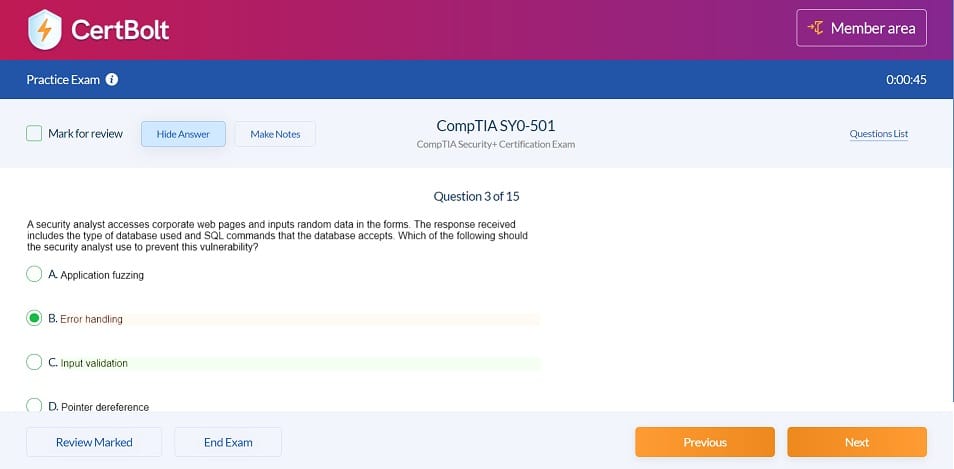
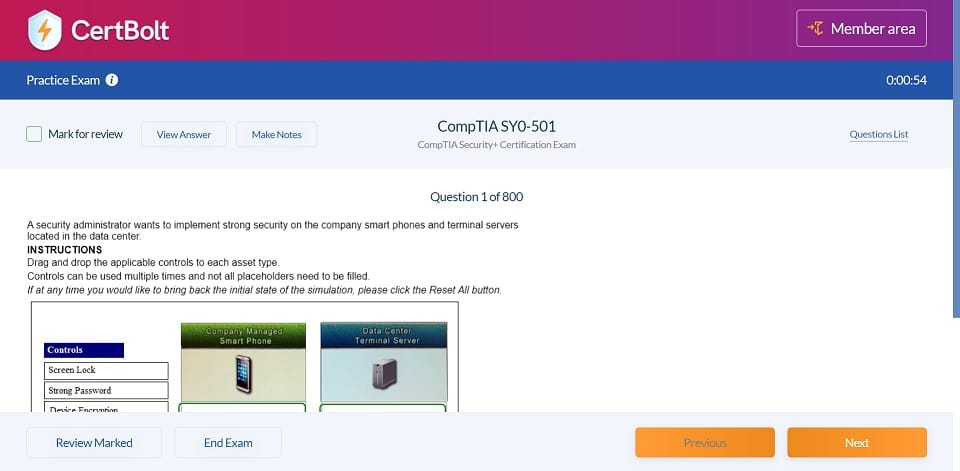
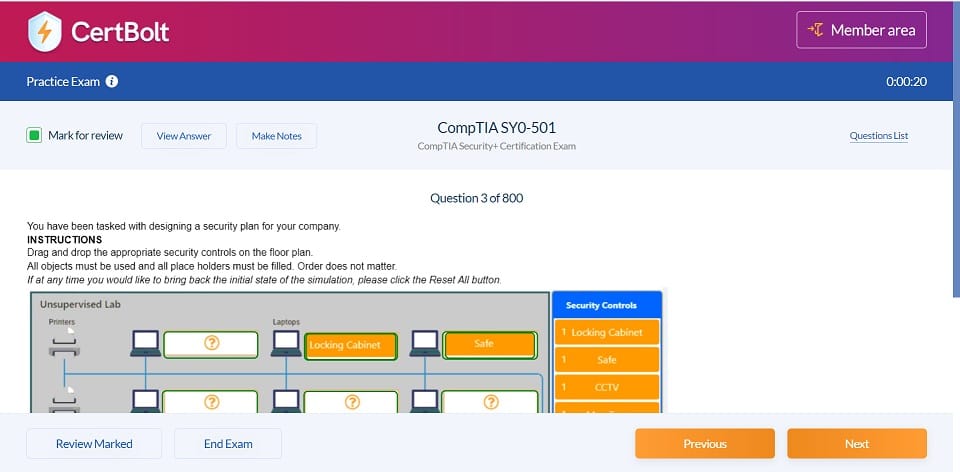
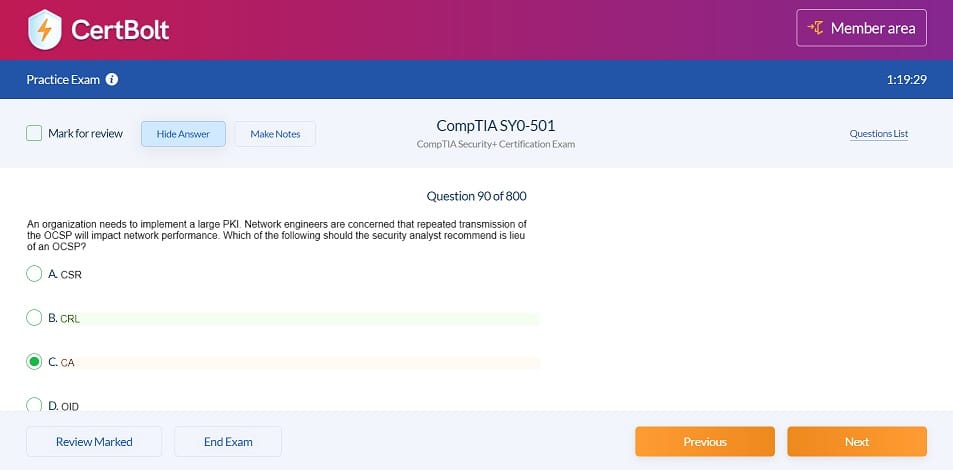
Includes 100% Updated GCIH exam questions types found on exam such as drag and drop, simulation, type in, and fill in the blank. Fast updates, accurate answers for GIAC GCIH exam. Exam Simulator Included!
-

GCIH Study Guide
243 PDF Pages
Study Guide developed by industry experts who have written exams in the past. Covers in-depth knowledge which includes Entire Exam Blueprint.
-
-
GIAC GCIH Exam Dumps, GIAC GCIH practice test questions
100% accurate & updated GIAC certification GCIH practice test questions & exam dumps for preparing. Study your way to pass with accurate GIAC GCIH Exam Dumps questions & answers. Verified by GIAC experts with 20+ years of experience to create these accurate GIAC GCIH dumps & practice test exam questions. All the resources available for Certbolt GCIH GIAC certification practice test questions and answers, exam dumps, study guide, video training course provides a complete package for your exam prep needs.
Building a Strong Study Plan for the GCIH Exam: A Complete Guide to Success
The cybersecurity landscape is changing faster than ever before. Every day organizations face an increasing number of threats from cybercriminals, hacktivists, insider threats, and advanced persistent threats. In this environment, incident handling and response are no longer optional skills. They are a critical part of any strong security program. The GIAC Certified Incident Handler, commonly referred to as GCIH, has become one of the most respected certifications for professionals looking to establish or advance their career in incident response. This certification is offered by the Global Information Assurance Certification, better known as GIAC, and it validates an individual’s knowledge in identifying, containing, eradicating, and recovering from security incidents.
The GCIH certification sits at the intersection of technical expertise and strategic incident response. While some certifications focus heavily on penetration testing or auditing, the GCIH concentrates on how attackers operate and how defenders can counteract those actions. For organizations, this makes the certification particularly valuable, as it ensures they have professionals on staff who not only understand how attacks occur but also how to properly respond to minimize damage. For professionals, it represents a badge of credibility in a competitive job market where employers want proven skills rather than theoretical knowledge.
Understanding the Role of GIAC in Cybersecurity Certifications
GIAC was founded to provide a practical, skills-based measurement of cybersecurity expertise. Unlike many certifications that rely solely on multiple-choice questions, GIAC certifications often emphasize hands-on knowledge and the application of real-world techniques. GIAC’s association with the SANS Institute further reinforces its credibility. SANS is one of the world’s leading providers of cybersecurity training, and its courses are often closely aligned with GIAC certifications. The GCIH certification is strongly connected to the SANS SEC504 course, which is centered on hacker tools, techniques, exploits, and incident handling.
The role of GIAC certifications, including GCIH, is to fill a gap that exists between theoretical knowledge and operational capability. In cybersecurity, having a professional who can explain the concepts of malware or vulnerabilities is useful, but having someone who can actively respond to a live ransomware incident or a distributed denial-of-service attack is invaluable. GCIH ensures that individuals are capable of stepping into that role with confidence.
Why Incident Handling is Critical in Today’s Cybersecurity Landscape
Organizations around the world are constantly under attack. From small businesses to multinational enterprises, no one is immune to the risks posed by cybercriminals. Phishing campaigns, zero-day vulnerabilities, ransomware attacks, and insider threats can compromise sensitive data, halt operations, and cause millions of dollars in damages. This reality makes incident handling one of the most important functions in modern security operations.
Incident handling refers to the structured process of preparing for, detecting, containing, eradicating, and recovering from security incidents. Without skilled incident handlers, organizations risk longer downtimes, greater data loss, and reputational damage. Skilled professionals are the difference between a company recovering quickly from a breach and one suffering long-term consequences.
The GCIH certification trains and validates professionals to deal with these exact scenarios. Holders of this certification are expected to recognize attack vectors, understand adversary tactics, and apply proven response methodologies. This capability not only reduces the impact of incidents but also demonstrates to stakeholders, regulators, and customers that the organization takes security seriously.
Who Should Pursue the GIAC GCIH Certification
The GCIH certification is not just for one type of cybersecurity professional. It is designed for a wide range of roles across the information security field. Incident handlers, of course, benefit directly because the certification aligns perfectly with their day-to-day responsibilities. However, security analysts working in security operations centers also gain significantly, as the skills they learn prepare them to identify intrusions quickly and escalate them effectively.
Penetration testers and ethical hackers may also find value in the certification. By understanding not only how attacks are carried out but also how organizations respond, they gain a more rounded perspective on their testing activities. System and network administrators benefit as well, since they are often on the front lines when incidents occur, and having the skills to identify suspicious activity and begin initial response can be critical in minimizing damage.
Even managers and team leads in security can find GCIH beneficial. While they may not perform the technical details of incident response, understanding the methodologies and challenges faced by their teams allows them to provide better leadership and resource allocation. This wide applicability makes GCIH a versatile certification that supports professionals at different stages of their career journey.
The Skills Validated by the GCIH Certification
The GCIH certification goes beyond theoretical knowledge. It validates hands-on skills that are directly applicable in real-world environments. Some of the critical skills assessed include the ability to recognize and respond to reconnaissance activities, scanning, and enumeration. Candidates must understand how attackers exploit vulnerabilities through privilege escalation, buffer overflows, or malware deployment.
Another key area involves defense mechanisms. Professionals are expected to know how to apply intrusion detection systems, firewalls, log analysis, and incident response tools to contain threats. They must also understand the psychology and methodology of hackers, including the tactics, techniques, and procedures they use to achieve their objectives.
Perhaps most importantly, GCIH emphasizes the complete incident handling process. This includes preparation, identification, containment, eradication, recovery, and lessons learned. Each of these phases requires specific actions, and certified individuals must be able to execute them effectively under pressure. The ability to remain calm, think strategically, and act decisively is one of the most valuable qualities the certification instills.
How Organizations Benefit from Hiring GCIH-Certified Professionals
From an organizational perspective, hiring GCIH-certified professionals represents a strategic investment in security. These individuals bring proven skills to the table, which means they are less likely to make mistakes when incidents occur. They can handle incidents more efficiently, which minimizes downtime, data loss, and costs associated with breaches.
Another benefit is compliance and regulatory requirements. Many industries, including finance, healthcare, and government, must comply with strict data protection laws and standards. Having certified professionals demonstrates a proactive approach to security and strengthens the organization’s ability to meet these requirements. It also provides reassurance to clients and partners that the company is taking concrete steps to protect sensitive information.
Organizations also benefit from the knowledge transfer that GCIH-certified professionals can provide. These individuals often become leaders in incident response, training and mentoring other staff, and raising the overall level of security awareness. In a field where the human factor often represents the weakest link, having skilled professionals capable of building a strong security culture is invaluable.
The Link Between SANS Training and the GCIH Exam
While it is possible to study for the GCIH exam independently, many candidates choose to attend the SANS SEC504 course. This course is specifically designed to teach the knowledge and skills that the GCIH exam validates. It covers hacker tools, techniques, exploits, and the incident handling process in detail.
The training is hands-on and scenario-driven, which allows students to apply their learning in simulated environments. By working through attack simulations and incident response exercises, participants gain the confidence to handle real-world incidents. For many, the course becomes an eye-opening experience that reveals how attackers think and how defenders must adapt.
The synergy between SANS training and the GCIH exam has made the certification one of the most practical and respected in the industry. While the investment in training can be significant, many professionals and organizations see it as worthwhile due to the long-term benefits in security capability and career growth.
Real-World Applications of GCIH Knowledge
The skills gained from earning the GCIH certification are not confined to theoretical scenarios. They apply directly to the challenges organizations face every day. For example, when a phishing campaign leads to malware installation on an employee’s workstation, an incident handler with GCIH certification will know how to identify the breach, contain it before it spreads, eradicate the malware, and recover the system safely.
In another scenario, if a company experiences a denial-of-service attack against its web servers, a GCIH-certified professional can quickly analyze logs, identify the nature of the attack, and implement defensive measures. The certification also prepares professionals to handle insider threats, where trusted employees misuse their access for malicious purposes.
These real-world applications demonstrate that the certification is not just a line on a resume. It is a set of skills that can be applied immediately, often in high-pressure situations where mistakes can be costly. The ability to apply structured, tested methodologies to unpredictable challenges is what makes GCIH-certified professionals highly valued.
The Growing Demand for Incident Handling Expertise
As cyber threats evolve, the demand for incident handling expertise continues to grow. Organizations are recognizing that prevention alone is no longer enough. No matter how strong their defenses, it is likely that an incident will eventually occur. The real question is how quickly and effectively they can respond when it does.
This has created a strong job market for professionals with incident handling skills. Employers are actively seeking individuals with certifications like GCIH to strengthen their security teams. Positions in security operations centers, digital forensics, and incident response teams often list GCIH as a preferred or required qualification.
Industry reports also highlight the shortage of skilled cybersecurity professionals worldwide. The gap between available talent and open positions is significant, and certifications like GCIH help bridge that gap by providing assurance of skill and readiness. For professionals, this translates to greater career opportunities and higher earning potential.
Career Paths Enhanced by the GCIH Certification
The GCIH certification opens doors to a variety of career paths. Incident handler is the most direct role, but the certification is also highly relevant for security analysts, intrusion analysts, and digital forensic investigators. These roles all require an understanding of attacker behavior and the ability to respond effectively to security incidents.
For those in penetration testing or red team roles, GCIH provides insight into how defenders operate. This knowledge allows testers to create more realistic attack simulations and understand how their activities are likely to be detected or stopped. For system and network administrators, the certification provides a deeper understanding of security threats and equips them with the ability to recognize and escalate suspicious activity more effectively.
Over time, professionals with GCIH can advance into leadership roles such as incident response manager, SOC manager, or even chief information security officer. The certification provides a strong technical foundation that can support growth into strategic and management positions.
The Value of GCIH in Building a Resilient Security Program
For both professionals and organizations, the value of GCIH extends beyond individual skills. It contributes to building a culture of resilience in security. By ensuring that staff are trained to recognize and respond to incidents, organizations can move from a reactive posture to a proactive one.
Incident response is not just about dealing with crises as they occur. It is about preparing in advance, practicing scenarios, and learning from past events. The methodologies reinforced by the GCIH certification align with these principles, promoting a cycle of continuous improvement. Organizations that employ GCIH-certified professionals are better positioned to adapt to evolving threats and maintain trust with stakeholders.
Exploring the GIAC GCIH Exam
The GIAC Certified Incident Handler exam is designed to test not only theoretical knowledge but also the ability to apply skills in practical scenarios. Many cybersecurity certifications rely heavily on memorization and definitions, but the GCIH exam is different because it emphasizes the actual methods attackers use and the countermeasures incident handlers must employ. Candidates preparing for this exam quickly realize it demands a blend of deep technical understanding and situational awareness.
Unlike shorter entry-level exams, the GCIH is structured to simulate real-world challenges. The exam is proctored, ensuring its credibility, and consists of multiple-choice questions that assess broad and detailed knowledge. What sets it apart is the scope of domains it covers, which ensures a well-rounded assessment of incident handling capabilities.
Structure of the GCIH Exam
The exam typically includes between 106 and 180 multiple-choice questions. Candidates are given four hours to complete it, which requires strong time management. The passing score is set around 70 percent, meaning a candidate must answer a significant majority of questions correctly to succeed.
This structure allows GIAC to assess both depth and breadth of knowledge. Candidates cannot rely on expertise in just one area, such as malware analysis or network defense. Instead, they must demonstrate competence across multiple domains that reflect the varied nature of modern cybersecurity incidents.
Another unique feature of GIAC exams, including the GCIH, is the open-book format. Candidates are allowed to bring printed study materials, notes, and indexes into the exam environment. While this may seem like it makes the test easier, the reality is the opposite. Because of the time constraints and complexity of the questions, only well-prepared candidates who have organized their resources effectively can perform well.
Registration and Logistics
Registering for the exam involves creating an account on the GIAC website, selecting the certification, and paying the exam fee. The fee is substantial, reflecting the prestige of the certification and the resources required to maintain its credibility. Once registered, candidates receive exam vouchers valid for a specific period, usually 120 days.
The exam can be taken either in a testing center or through remote proctoring. Remote proctoring has become increasingly popular because it allows candidates to take the exam from home or office, provided they have a secure and quiet environment. Proctors monitor the session using webcam and microphone feeds to ensure exam integrity.
Scheduling the exam requires planning ahead, especially for those balancing study with work responsibilities. Because the exam fee is significant, most candidates invest substantial time in preparation before attempting the test.
Domains Covered by the GCIH Exam
The GCIH exam is built around domains that mirror the incident handling process and the real-world tools and techniques attackers use. Each domain has specific objectives that guide candidates in their preparation.
Incident Handling Process
The foundation of the GCIH exam is the incident handling process itself. This includes the six major phases: preparation, identification, containment, eradication, recovery, and lessons learned. Candidates must understand each stage in detail, including what actions are required and the best practices that apply.
Preparation covers building incident response policies, defining communication plans, and ensuring the right tools and training are in place. Identification involves detecting that an incident has occurred, often through intrusion detection systems, log analysis, or anomaly detection. Containment focuses on limiting the spread of the attack, such as isolating infected machines or blocking malicious IP addresses.
Eradication requires removing the threat entirely, whether that means deleting malware, closing exploited vulnerabilities, or removing unauthorized user accounts. Recovery focuses on restoring systems to normal operation while ensuring they are hardened against future attacks. Finally, lessons learned emphasize documenting the incident, identifying weaknesses, and improving processes for the future.
Hacker Techniques and Attack Vectors
The exam requires candidates to understand how attackers operate. This includes reconnaissance techniques such as scanning, enumeration, and footprinting. Candidates are expected to recognize tools like Nmap, whois lookups, and other methods attackers use to gather intelligence on targets.
Scanning and exploitation methods form another critical area. Knowledge of buffer overflows, privilege escalation, and backdoor installations is necessary to answer questions in this domain. The exam often tests whether candidates can identify the intent of these techniques and the appropriate responses.
Social engineering also appears as a key attack vector. Phishing emails, pretexting, and other manipulation tactics are part of the exam because they remain among the most successful ways attackers gain initial access. Understanding how to recognize and defend against these human-centric attacks is as important as knowing technical exploits.
Exploitation and Malware
Another major domain of the GCIH exam is exploitation and malware. Candidates must be familiar with different types of malware, such as trojans, worms, rootkits, and ransomware. They need to understand how malware spreads, what indicators of compromise may appear, and how to mitigate infections.
Exploitation also covers the process of attackers gaining unauthorized access. This may involve SQL injection, cross-site scripting, or exploiting unpatched vulnerabilities. Understanding these techniques enables incident handlers to anticipate attacks and respond more effectively when they occur.
Questions in this domain may test knowledge of specific tools like Metasploit, which attackers often use for exploitation. Candidates are expected to know not only how the tools function but also what signs they leave behind that defenders can identify.
Defense Mechanisms and Countermeasures
Incident handling is not just about understanding attacks but also about implementing defenses. The GCIH exam tests candidates on intrusion detection systems, firewalls, endpoint protection, and other security tools. They must know how to configure these tools effectively and interpret their alerts.
Log analysis plays an important role in this domain. Being able to read logs from servers, firewalls, or intrusion detection systems and identify signs of malicious activity is critical for responding to incidents quickly. Candidates are often tested on their ability to match specific log entries to attack activities.
Another aspect of defense is patch management and vulnerability assessment. The exam assesses whether candidates understand how to identify system weaknesses and apply updates or mitigations to prevent exploitation.
Incident Analysis and Forensics
While the GCIH is not a digital forensics certification, it still covers basic incident analysis skills. Candidates are expected to understand how to preserve evidence, maintain chain of custody, and perform initial analysis of compromised systems. This knowledge ensures that responders do not inadvertently destroy critical information that may be needed for legal or investigative purposes.
Forensics in the context of GCIH focuses on supporting the incident handling process. For example, determining how malware entered a network, what data may have been exfiltrated, or whether an attacker still has persistence in the environment. Understanding these aspects ensures a more complete response to incidents.
Sample Exam Questions
While actual exam questions are confidential, sample questions provided by GIAC give an idea of what candidates can expect. A typical question may describe a scenario where an employee receives a suspicious email with an attachment, and the candidate must determine the correct initial response. Another question might provide a snippet of log data and ask the candidate to identify what type of attack is occurring.
These scenario-driven questions require more than rote memorization. Candidates must analyze the information provided, apply their knowledge, and select the most appropriate action. This format ensures the exam measures practical ability rather than simply theoretical definitions.
Common Mistakes Candidates Make
Many candidates underestimate the difficulty of the GCIH exam. Because it is open book, they assume they can rely on their notes and resources during the test. However, the time pressure makes it impossible to look up every answer. Only those who have mastered the material and created an efficient system for referencing their resources succeed.
Another common mistake is focusing too much on one area, such as malware or exploitation, and neglecting others like incident handling process or defense mechanisms. The broad scope of the exam requires balanced preparation. Overconfidence in technical skills without sufficient study of methodology often leads to poor results.
Time management during the exam is another challenge. Some candidates spend too long on difficult questions and run out of time before answering all items. Developing a strategy, such as marking tough questions for review and returning later, can make a significant difference.
Why the CIHG Exam is Unique
What makes the GCIH exam unique is its alignment with real-world needs. Unlike certifications that focus primarily on theory or management, the GCIH tests whether candidates can step into the role of an incident handler and perform effectively under pressure. This practical emphasis ensures that the certification is respected by employers.
The open-book nature of the exam also distinguishes it. Rather than testing memorization, it tests a candidate’s ability to use knowledge effectively. In real-world incident handling, professionals often refer to documentation, checklists, and resources while working under stress. The exam mirrors this reality, creating a more accurate assessment of readiness.
The connection with SANS training further enhances its uniqueness. Because the SEC504 course is closely aligned with the exam, candidates who take the course and then pass the exam emerge with a strong balance of theory and hands-on practice. This integration of training and certification is rare and contributes to the high value of GCIH.
The Broader Context of GIAC Domains
The GCIH exam is part of a broader ecosystem of GIAC certifications, each focusing on different aspects of cybersecurity. While some GIAC exams focus on penetration testing, digital forensics, or industrial control systems, the GCIH focuses on incident handling. Together, these certifications create a framework that allows professionals to specialize while also building a comprehensive understanding of security.
This broader context matters because many incident handlers eventually expand into related areas. For example, a GCIH-certified professional might later pursue GIAC’s GCIA for intrusion analysis or GCFA for advanced forensics. The foundation built in GCIH makes these further certifications easier to achieve and creates a well-rounded career path.
Building a Strong Study Plan for the GCIH Exam
Preparing for the GIAC Certified Incident Handler exam requires a structured approach. Because the certification covers multiple domains and emphasizes practical knowledge, a random or unorganized study method is unlikely to succeed. The first step is to design a study plan that fits your schedule, learning style, and goals. For some candidates, a three-month intensive plan works, while others may prefer a six-month timeline that allows for steady progress alongside work responsibilities.
A strong plan includes allocating time for reading, hands-on practice, creating an index for open-book referencing, and completing practice exams. Breaking the preparation into weekly goals ensures steady progress. Candidates who commit even two hours per day consistently find that the material becomes more manageable and less overwhelming.
Recommended Resources for Exam Preparation
One of the most important decisions in preparing for the exam is choosing the right resources. The official GIAC objectives outline exactly what will be tested, and this should be the foundation of your preparation. The objectives list is detailed, covering the incident handling process, hacker tools, exploits, malware, and defensive strategies.
The most direct resource for many candidates is the SANS SEC504 course, which is designed to align with the GCIH exam. This course provides comprehensive coverage of all domains, along with hands-on labs and exercises that mirror real-world incidents. While expensive, SEC504 offers tremendous value for those who can access it, either through employer sponsorship or personal investment.
In addition to official training, many candidates use supplementary materials such as textbooks on intrusion detection, malware analysis, and computer security fundamentals. Open-source projects, technical blogs, and community forums can also provide valuable insights. When gathering resources, it is important to focus on quality over quantity, selecting references that directly support the exam objectives.
Creating and Using an Exam Index
Because the GCIH exam is open book, building a well-structured index is one of the most effective preparation strategies. An index allows candidates to quickly find critical information during the test. Without it, valuable time can be wasted searching through thick binders or disorganized notes.
A strong index lists keywords, tools, commands, and concepts along with the page numbers where they can be found in your study materials. For example, terms like buffer overflow, Metasploit, or intrusion detection signatures should be clearly indexed. Some candidates create color-coded indexes, grouping terms by domain or topic.
The process of building the index itself reinforces learning. By reviewing the material and deciding what to include, candidates internalize the most important information. During the exam, the index becomes a roadmap, allowing quick navigation and reducing stress under time pressure.
Importance of Hands-On Practice
Reading about incident handling concepts is not enough to pass the exam or succeed in real-world roles. Hands-on practice is essential. Setting up a home lab is one of the most effective ways to gain practical experience. This does not require expensive equipment. A modern laptop or desktop with sufficient memory can host multiple virtual machines using software like VirtualBox or VMware Workstation.
In a home lab, candidates can simulate attacks and responses. For example, one machine can run Kali Linux to perform scans or exploit attempts, while another machine runs Windows or Linux as the target. Practicing intrusion detection with Snort, analyzing logs, or experimenting with firewall rules deepens understanding.
Hands-on practice not only prepares candidates for the exam but also builds confidence. When confronted with scenario-based questions, those who have experimented with the tools and techniques firsthand are more likely to recognize the correct answers.
Using Practice Exams Effectively
Practice exams play a vital role in preparation. They provide insight into the format, pacing, and difficulty level of the real exam. Candidates should treat practice exams as diagnostic tools rather than simple scorekeepers. When a question is answered incorrectly, the focus should be on understanding why the answer was wrong and what concept needs reinforcement.
Taking practice exams under timed conditions is particularly useful. It trains candidates to manage the four-hour time limit effectively. Some candidates simulate the real test environment by using only their study index and avoiding external distractions. This type of rehearsal reduces anxiety on exam day and helps refine time management strategies.
Repeated practice exams also reveal patterns in weak areas. For example, if a candidate consistently struggles with malware analysis questions, they can dedicate extra study time to that domain. Over time, the goal is to see improvement not just in scores but in confidence when approaching each type of question.
Leveraging SANS SEC504 Training
The SANS SEC504 course is closely associated with the GCIH exam. It is designed to provide both the theoretical foundation and the hands-on practice needed to succeed. The course covers hacker tools, techniques, exploits, and the incident handling process, all of which align directly with the exam domains.
Participants in SEC504 benefit from access to expert instructors, lab environments, and practical exercises. The course emphasizes learning by doing, which is one of the most effective ways to internalize complex concepts. For those who can attend in person, the networking opportunities with peers and instructors are another valuable aspect.
Even those who cannot attend SEC504 may find value in reviewing the publicly available course materials or seeking similar content through books and online labs. While not strictly required for passing the exam, SEC504 is often recommended as the most efficient path to mastering the required knowledge.
Strategies for Time Management During the Exam
Time management is often the difference between success and failure on the GCIH exam. With as many as 180 questions to answer in four hours, candidates must pace themselves carefully. Spending too much time on one question can jeopardize the ability to complete the entire exam.
One effective strategy is to answer easy questions first and flag more difficult ones for review. This ensures that every question within the candidate’s knowledge is answered before time runs out. Returning to difficult questions later allows for better focus and reduces the risk of leaving questions unanswered.
Another strategy involves setting time checkpoints. For example, aiming to complete 45 questions per hour keeps progress on track. If a checkpoint is missed, candidates can adjust their pace in the next section. Practicing these strategies during mock exams builds familiarity and reduces stress on the actual exam day.
Joining Cybersecurity Communities and Study Groups
Preparing for the GCIH exam does not have to be a solitary effort. Many candidates benefit from joining online forums, study groups, or local cybersecurity communities. These groups provide opportunities to discuss challenging concepts, share resources, and ask questions from those who have already passed the exam.
Communities on platforms like Reddit, Discord, or LinkedIn often have dedicated channels for GIAC certifications. In these spaces, candidates exchange tips on building indexes, recommend study resources, and sometimes even share practice questions to test each other’s knowledge.
The accountability of being part of a group also helps many candidates stay on track. Regularly scheduled discussions or study sessions provide motivation and structure. Collaboration with peers enhances understanding because explaining a concept to others often reveals gaps in one’s own knowledge.
Balancing Work and Study Commitments
Many GCIH candidates are full-time professionals, which means balancing preparation with job responsibilities can be challenging. Developing a realistic schedule is essential. Setting aside specific hours each day for study, even if only one or two, is more effective than sporadic, unfocused efforts.
Communicating with employers can also help. Some organizations support employees in pursuing certifications and may provide study leave, training budgets, or flexible schedules. Taking advantage of these opportunities reduces the stress of balancing preparation with professional obligations.
For those unable to adjust work schedules, integrating study into daily routines can be effective. Listening to cybersecurity podcasts during commutes, practicing lab exercises on weekends, or reviewing flashcards during breaks can maximize available time.
Maintaining Motivation Throughout Preparation
Long preparation periods can lead to fatigue, so maintaining motivation is a key part of exam success. Setting short-term goals, such as completing a chapter or mastering a particular tool, provides a sense of achievement and keeps momentum going. Celebrating these milestones, even in small ways, reinforces positive progress.
Visualizing the long-term benefits of the certification can also motivate candidates. Whether the goal is career advancement, salary increase, or greater professional credibility, keeping the outcome in mind provides energy during challenging study sessions.
Another motivational technique is tracking progress in a visible way. Some candidates use study logs, checklists, or progress bars to see how much they have accomplished. This visual feedback encourages persistence and highlights how close they are to their ultimate goal.
Staying Calm and Confident on Exam Day
The final stage of preparation involves mental readiness for the exam itself. Anxiety can undermine performance, even for well-prepared candidates. Establishing a calm routine on exam day is crucial. Getting sufficient sleep, eating a balanced meal, and avoiding last-minute cramming can all improve focus.
Arriving early for in-person exams or setting up the test environment in advance for remote proctoring reduces stress. Having the index and materials organized ensures no time is wasted during the test. Breathing techniques or short mindfulness exercises before starting the exam can also help maintain composure.
Confidence comes from preparation. Candidates who have studied thoroughly, practiced hands-on, and rehearsed under timed conditions enter the exam with a stronger mindset. Trusting in the preparation process allows them to stay calm and perform at their best.
Deepening Your Understanding of Exam Objectives
The foundation of a successful study plan begins with mastering the official exam objectives. The GIAC Certified Incident Handler exam is not limited to memorization of terminology; instead, it emphasizes applying knowledge in real-world contexts. Each objective area must be carefully analyzed and studied with intent. For example, the objective “Detect and respond to common attacks” requires both theoretical understanding of techniques like buffer overflows or privilege escalation and hands-on familiarity with detection tools such as intrusion detection systems or endpoint monitoring solutions.
By reviewing the objectives line by line, candidates can identify weak points early in their preparation. Some individuals are comfortable with malware behavior but struggle with exploit mechanics. Others may understand the phases of incident response but need additional practice on forensic analysis. A careful mapping of personal strengths and weaknesses against the exam objectives enables a candidate to design a focused plan that maximizes study efficiency.
Treat the objectives as a checklist. As each item is covered through study, hands-on practice, or discussion in study groups, mark it as complete. This incremental progress builds confidence and ensures that no topic is unintentionally overlooked.
Building a Structured Weekly Schedule
A structured weekly schedule is the backbone of long-term preparation. Instead of approaching the exam sporadically, candidates should establish a clear routine that balances reading, practice, and review. A common framework divides preparation into four phases: initial exploration, deep study, practical application, and refinement.
In the initial exploration phase, candidates skim through all materials to understand the breadth of topics. This creates context before diving into details. The deep study phase is when reading official materials, textbooks, and supplementary guides takes priority. Practical application then follows, where time is spent in labs or simulations to reinforce theory with practice. Finally, refinement involves using indexes, flashcards, and practice exams to polish knowledge and improve recall.
Each week should contain a blend of these phases, though the balance shifts over time. Early weeks emphasize reading and building notes, while later weeks focus heavily on labs and practice questions. Sticking to this rhythm prevents burnout and avoids the trap of overemphasizing one domain while neglecting others.
Leveraging Layered Learning Resources
A strong preparation strategy involves using a combination of layered resources. Official training such as SANS SEC504 provides structured and curated content, but additional sources broaden perspective and ensure depth of understanding. Textbooks on network security, open-source threat intelligence feeds, and malware analysis whitepapers complement the structured course.
Blogs and community write-ups are especially valuable because they often highlight emerging attack techniques or practical troubleshooting scenarios. For instance, a blog describing how a security analyst responded to a ransomware attack may demonstrate concepts like containment and eradication in a more tangible way than textbooks. Candidates should collect such resources, summarize them in their own words, and link them to exam objectives.
Layered learning also prevents monotony. Alternating between reading technical chapters, watching instructional videos, and engaging in hands-on labs keeps the preparation process engaging. The varied input reinforces retention by stimulating different modes of learning.
Creating a Personalized Indexing Strategy
While many candidates prepare an exam index, the effectiveness of the index depends heavily on personalization. Simply copying another person’s index may save time, but it undermines the learning benefits that come from building one yourself. When creating a personalized index, the candidate must read through the material, identify keywords, and decide how best to organize them for quick retrieval.
An effective index is not just alphabetical. Some candidates prefer thematic grouping, where tools, commands, and techniques are listed under broader categories like malware, exploits, or response actions. Others find value in layering, with a primary index listing major terms and a secondary appendix mapping subtopics. The color-coding of domains can also accelerate retrieval under pressure.
Most importantly, the act of selecting what to include in the index forces the candidate to prioritize. Each chosen keyword represents a decision that the term is important enough to require rapid lookup. This reinforces understanding and highlights recurring patterns in the material.
Designing a Practical Home Lab
A home lab is not just a recommendation; it is an essential element of preparation. Incident handling is inherently practical, and the exam reflects this reality by presenting questions that require applied knowledge. Designing a home lab begins with virtualization tools. VirtualBox, VMware Workstation, or Hyper-V can host multiple operating systems on a single machine, creating a miniature network environment.
At minimum, the lab should contain one attacking machine such as Kali Linux, one vulnerable target system like an outdated Windows instance or a deliberately vulnerable Linux distribution, and one monitoring machine for detection and logging. This triad enables simulations of real-world attack and defense cycles.
Practical exercises should include scanning with Nmap, exploiting vulnerabilities using Metasploit, monitoring network traffic with Wireshark, and setting up intrusion detection rules with Snort or Suricata. Candidates can also experiment with incident handling procedures, such as isolating compromised machines, collecting forensic evidence, and restoring services. These exercises transform abstract knowledge into practical skills that can be recalled under exam conditions.
Incorporating Practice Exams into Study Cycles
Practice exams are most effective when integrated into the study cycle, not saved exclusively for the final weeks. Early exposure to practice questions reveals the format and structure, reducing the element of surprise on test day. More importantly, they highlight knowledge gaps that need reinforcement.
After completing a practice exam, candidates should analyze each incorrect answer. Why was the wrong choice selected? Was the concept misunderstood, or was the right information known but overlooked under time pressure? This reflection phase is as valuable as the test itself.
Timed practice exams are especially beneficial. Candidates must learn to balance accuracy with speed. Finishing 180 questions in four hours requires a disciplined pace, so simulating the exam environment multiple times ensures familiarity with the pressure.
The Value of SEC504 and Alternatives
While SANS SEC504 is considered the gold standard for preparing for the GCIH exam, it is not accessible to everyone due to cost. For those who can afford it, SEC504 provides a structured path, hands-on labs, and access to expert instructors. The labs, in particular, mirror real attack and defense scenarios that strengthen practical skills.
However, strong alternatives exist for self-learners. Free online labs such as Hack The Box, TryHackMe, and Cyber Ranges provide exercises that align with many exam objectives. Textbooks like “Incident Response & Computer Forensics” or “Practical Malware Analysis” provide detailed coverage of core topics. Supplementary courses from platforms like Udemy or Cybrary offer affordable introductions to tools and techniques.
The key is not which resource is chosen but how consistently it is used. Whether following SEC504 or a combination of books and labs, disciplined engagement leads to mastery.
Time Management Framework for Exam Success
Time management must be practiced long before the exam. A useful framework is the “90/60 rule.” Spend no more than 90 seconds on a question during the first pass. If the answer is not clear, flag it and move forward. After completing the first pass, use the remaining time to revisit flagged questions with a fresh perspective.
Breaking the exam into time checkpoints also provides control. For example, after the first hour, 45 questions should be completed. By the halfway point, at least 90 should be answered. These milestones prevent falling behind without realizing it.
During practice, candidates should test different pacing strategies. Some find it helpful to answer questions linearly, while others prefer skimming for easier questions first. The goal is to find a method that feels natural and minimizes stress.
Engaging with Study Groups and Communities
Study groups add a social dimension to preparation. Explaining concepts to peers forces clarity of thought and reveals gaps in understanding. Listening to others’ explanations introduces different perspectives and problem-solving approaches.
Online communities provide continuous support. Discord channels dedicated to GIAC certifications, Reddit threads, or LinkedIn groups host discussions about building indexes, interpreting exam objectives, and sharing study schedules. Some communities organize group labs or timed question sessions, which simulate collaborative problem-solving environments.
Participation in these communities not only improves knowledge but also builds a network of peers pursuing similar goals. The shared motivation and accountability often help candidates sustain momentum through long preparation cycles.
Managing Work, Study, and Life Balance
Balancing preparation with professional and personal responsibilities requires conscious planning. Instead of leaving study sessions to chance, candidates should schedule them as fixed appointments. Consistency is more valuable than intensity. Two hours every evening across several months often yields better results than sporadic marathon sessions.
Employers may also be allies in the journey. Some companies subsidize certification costs or provide study leave. Communicating goals with supervisors can open opportunities for flexible schedules or financial support. Even if such benefits are unavailable, simply informing colleagues can foster understanding and reduce conflicts during intense preparation periods.
In cases where schedules are rigid, micro-learning strategies become essential. Listening to security podcasts during commutes, reviewing flashcards while waiting in line, or watching short instructional videos during breaks helps reclaim small fragments of time.
Sustaining Long-Term Motivation
Maintaining motivation over several months is often more difficult than learning the material itself. To avoid burnout, candidates should set small, achievable goals. Completing a single chapter, mastering a specific tool, or finishing a set number of practice questions provides a sense of accomplishment. Celebrating these milestones, even modestly, reinforces momentum.
Visualization also plays a powerful role. Candidates should regularly remind themselves of why they are pursuing the certification. Whether the motivation is career advancement, increased salary potential, or personal satisfaction, keeping the larger purpose in mind helps sustain effort during challenging weeks.
Tracking progress visually—through charts, progress bars, or study logs—provides tangible evidence of advancement. Even when fatigue sets in, seeing how much ground has been covered encourages persistence.
Preparing for Exam Day with Confidence
The final phase of preparation focuses on mental readiness. Candidates must enter the exam calm, focused, and confident. The night before, cramming is counterproductive. Instead, light review of indexes and flashcards reinforces key points without overwhelming the brain. Adequate sleep and a balanced meal are non-negotiable.
For in-person exams, arriving early allows time to settle in and reduces anxiety. For online proctored exams, ensuring that the testing environment is clean, quiet, and technically functional prevents last-minute disruptions.
On exam day, candidates should rely on their preparation. When anxiety surfaces, breathing exercises or short mindfulness techniques can restore calm. Each question should be approached methodically: read carefully, eliminate wrong choices, and confirm with the index if necessary. Confidence comes from months of effort, and trusting that process allows candidates to perform at their peak.
Conclusion
Building a strong study plan for the GCIH exam is not simply about logging study hours but about creating a structured, disciplined, and balanced approach. Success requires alignment with the official objectives, consistent weekly progress, and a combination of theory and practice. By leveraging layered resources, designing a personalized index, and reinforcing knowledge through a home lab, candidates bridge the gap between conceptual understanding and applied skill.
Time management, both during preparation and on exam day, ensures that effort is directed efficiently. The support of study groups and communities adds accountability and fresh perspectives, while motivation strategies sustain momentum through long preparation cycles. Balancing professional and personal commitments with steady study habits allows candidates to integrate exam readiness into their daily lives without burnout.
Ultimately, confidence on exam day comes from preparation. Candidates who commit to hands-on practice, deliberate study, and effective self-organization approach the GCIH exam not as an obstacle but as a validation of their incident handling expertise. With a clear plan, the right resources, and a resilient mindset, passing the GCIH becomes a natural outcome of disciplined effort and dedication.
Pass your GIAC GCIH certification exam with the latest GIAC GCIH practice test questions and answers. Total exam prep solutions provide shortcut for passing the exam by using GCIH GIAC certification practice test questions and answers, exam dumps, video training course and study guide.
-
GIAC GCIH practice test questions and Answers, GIAC GCIH Exam Dumps
Got questions about GIAC GCIH exam dumps, GIAC GCIH practice test questions?
Click Here to Read FAQ
Purchase GIAC GCIH Exam Training Products Individually
Last Week Results!
Get PDF Version of GCIH Questions & Answers
With the PDF Version of the exam questions, you can study at any time and place, which are convenient to you. This means that you can work with the GCIH Questions & Answers PDF Version on your PC or use it on your portable device while on the way to your work or home. The PDF exam file also offers you the possibility to print it and use this printed version if you prefer it over the digital one.
Since the file is in the .pdf format, you can open it with a wide range of programs and applications, including Google Docs, OpenOffice, and Adobe Acrobat Reader DC. It is a convenient and easy-to-use option that will help you master new knowledge and skills with relevant materials.
* PDF Version is an add-on to your purchase of GCIH Questions & Answers and can't be purchased separately.
Only Registered Members can Download Exam Demo Questions & Answers
Please fill out your email address below in order to exam demo Questions & Answers.
Registration is Free and Easy, You Simply need to provide a valid email address.
- Trusted by hundreds of IT Certification Candidates Every Month
- 1200+ Exams Available
- Instant download After Registration